
Washington County Arrest Warrants Explained
Two courts split the work here. Washington County District Court handles felonies within Colorado's 13th Judicial District, while Washington County Court takes misdemeanors, petty offenses, traffic matters, and felony complaints at an early stage. A judge issues an arrest warrant only after a sworn or affirmed affidavit lays out facts strong enough for probable cause that an offense occurred and that the named person committed it. That standard comes from C.R.S. § 16-3-108. Once signed, the warrant directs a peace officer to arrest the person and bring them before a judge without needless delay. A summons can substitute when the court decides a command to appear fits better. Charge, facts, and the judge's judgment drive that choice. There is no fixed public Washington County chart.
Washington County Probable Cause Review
Probable cause is a practical threshold, not a high bar. The affidavit must hold facts a reasonable person would credit as showing an offense happened and that this particular person committed it. That requirement matters. An arrest warrant never starts as a bare name on a list; it starts with sworn facts and a judge's review. Public access is a separate question. A warrant, affidavit, or related filing can stay sealed or suppressed while an investigation runs, and juvenile or protected material carries extra limits. So a missing affidavit on a public docket neither cancels the court's process nor proves that no Washington County arrest warrant exists. Only the issuing court can confirm that.
Inside a Washington County Arrest Warrant
Washington County publishes no public warrant roster, so the fields described here rest on the statute, the docket, and the court form system. Local status codes and warrant-number formats are not published. Ask the Clerk for what a specific record shows.
| Case and warrant identifiers | A filing-year, case-class, and sequence may identify the court case; a separate control number may exist. |
|---|---|
| Issuing authority | District Court or County Court judge, with the court location and issue date. |
| Probable-cause material | A sworn affidavit, complaint, or other filing supporting the request, if public. |
| Offense block | Alleged offense, statutory citation, and classification tied to the pending case. |
| Bond block | Amount and permitted type if set, or a hold condition that requires court review. |
| Service and status | Agency, return, and active, served, recalled, quashed, or other controlling status. |
A sample court form may print something like 2023AA123456. That string is not a Washington County warrant number. Use the number on the actual notice or the one the Clerk supplies.
Washington County Docket Clues
The Washington-filtered Colorado docket is the closest public starting point for a warrant check. A hearing sometimes carries the label "Appearance on Arrest Warrant." That label ties a person to a date, time, courtroom, and case number, but a docket is only a schedule. It offers no Active or Cleared filter and guarantees no bond amount, service agency, or current warrant status. Searchers can narrow by the 13th Judicial District, Washington County, the courthouse, and County or District Court, or by case year, class, sequence, or a name. At least one filter beyond the date is required. If you are checking your own matter, write down the exact case number. Then call the Clerk of Court at 970-345-2756 and ask whether the hearing still stands and what must happen next.
Serving Arrest Warrants in Washington County
The Washington County Sheriff’s Office is the countywide law-enforcement agency and operates the Justice Center. Official county records also note law-enforcement agreements with Akron and Otis. Those agreements help explain how local calls may move through county law enforcement, but they do not create a public town warrant portal or promise which officer will make service.
A warrant directed to peace officers may be served by an authorized officer. After service, the agency records the arrest or return, and the court case proceeds to advisement and bond review. The person should verify both sides of that chain. The court controls issuance, recall, and the case record. The Sheriff can address custody, intake, and agency status.
Washington County Sheriff and Justice Center
26861 Hwy 34, Akron, CO 80720
970-345-2244
Ask about current agency status, intake instructions, and custody or bond routing.
Washington County Justice Center Path
Learning about an arrest warrant calls for a calm plan, not guesswork. A clerk call, an online payment, or a missing web entry does not cancel it. Call the issuing court first. Then call the Justice Center before appearing, and ask where intake happens, what identification to bring, what property is restricted, how medical screening and booking work, and whether bond can be set before you arrive. The Justice Center's posted bond notice describes Colorado timing protections. Bond should be set as soon as practicable and generally no later than 48 hours after arrival absent extraordinary circumstances. Once a money or personal-recognizance bond is ready and the person is returned or presented, release should come as soon as practicable and generally within six hours. Required electronic monitoring may take up to 24 hours. The notice also says a person who posts a money bond has a right to bond paperwork and the next court date. Those are real safeguards. They are not a promise of any specific bond in a Washington County arrest warrant case.
Comparing Washington County Warrant Process
What triggers each process, and what each one legally does, separates an arrest warrant from nearby forms of process in Washington County. Read the case label before you call, and you avoid the wrong route.
| Process | Main trigger | What it commands |
|---|---|---|
| Arrest warrant | Probable cause tied to an alleged offense | Peace officer arrests and brings the person before a judge |
| Summons | Charging process with an ordered appearance | The person appears without immediate arrest authority from that document |
| Bench warrant | Missed court, nonpayment, or court noncompliance | Arrest and return to address the missed duty |
| Sealed indictment | A charging instrument kept from public view | Not itself the same document as an arrest warrant |
Bench warrants in Washington County can come from County Court or a town court. A felony arrest warrant points to District Court instead. Search warrants stay separate, since they authorize a search rather than a public name lookup.
Washington County Bond Choices
Colorado allows four bond types: cash, personal recognizance, professional surety, and property. The judge sets both the type and the amount. A PR bond is simply a signed promise to return, with no money or property posted. A professional surety bond goes through a state-licensed bondsman. Property bonds call for Colorado real estate plus detailed title and equity paperwork. Washington County readers can see all the official categories, and the related JDF forms, on the Colorado Judicial bond page.
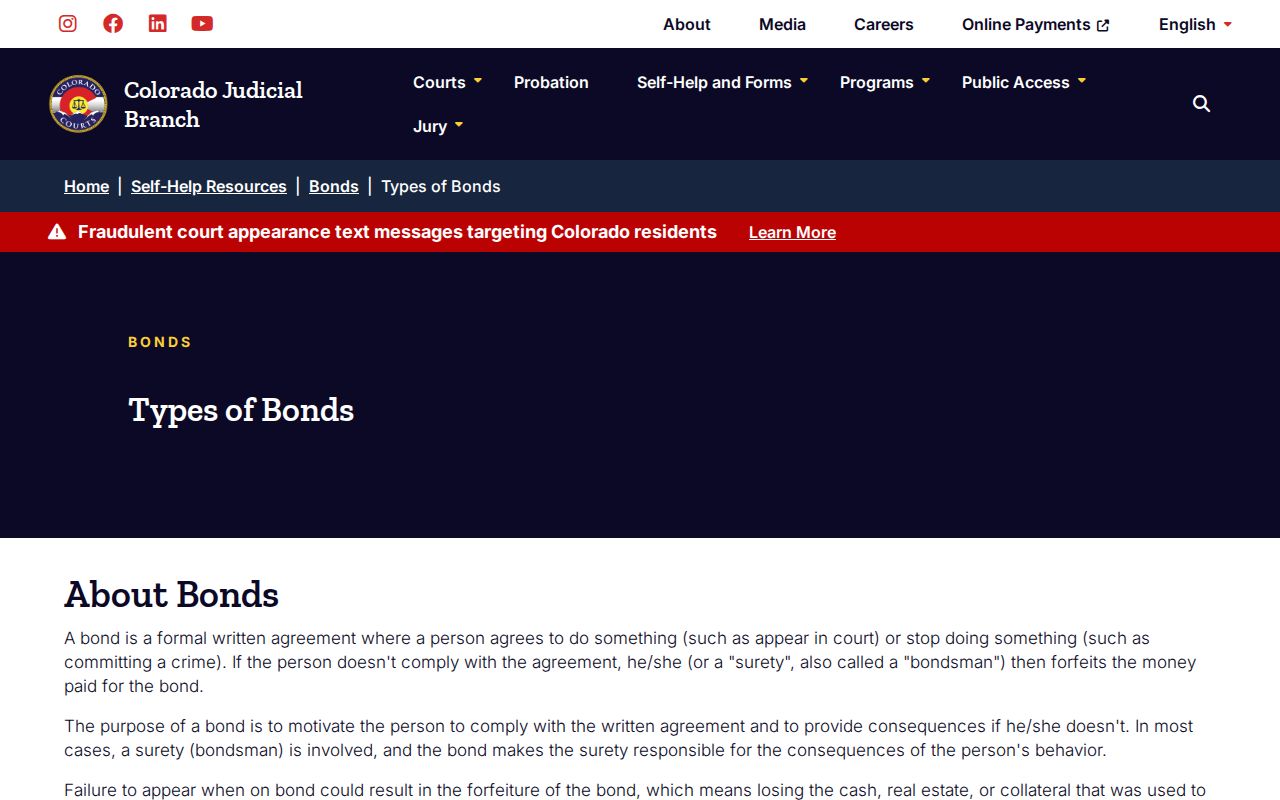
The categories matter once a Washington County judge sets release terms. Still, only the court can say which bond applies to a given arrest warrant. The Justice Center page lists a $10 bond fee and a maximum 3.5 percent card fee, and notes neither fee must be paid before release on a money bond. Confirm the current online bond link and payee through official contacts. Use them. Never pay a caller who threatens arrest and demands immediate funds.
Comparing Arrest, Summons, and Bench Warrants
Access rules shift from one court to the next. The Colorado court-record access summary lays out the limits, the fees, and why the online register is not the official record for a Washington County warrant lookup.
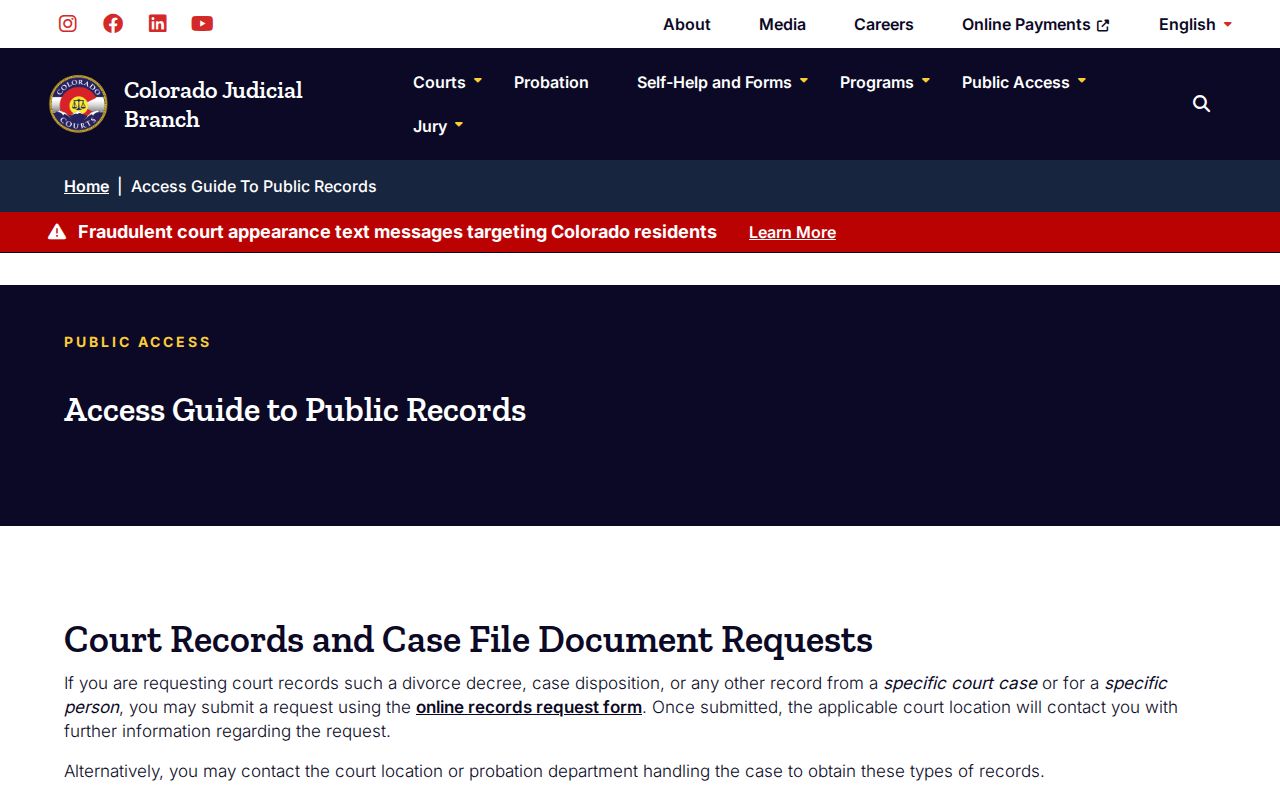
Treat public data as a lead, then verify any Washington County arrest warrant with the issuing court. When the docket leaves questions open, file the court Record/Document Request Form and send Washington requests to WashingtonRecordsRequest@judicial.state.co.us. The form takes case and party details, plus a date of birth if you have one. You can request a complaint, disposition, ticket, register of action, or certification. Most responses arrive within three business days, though some circumstances stretch that timeline. Copy and research fees may apply.
If There's an Arrest Warrant for You
Do not sit and wait for an unplanned arrest. Confirm the court, case number, warrant type, bond status, and next date through Washington Combined Court and the Sheriff. An attorney can pull the docket, call the court, file the right motion, and ask whether a scheduled appearance or surrender is on the table. Washington County publishes no guaranteed walk-through procedure.
- Call the Clerk at 970-345-2756 and identify the exact District or County Court case.
- Ask whether counsel can arrange an appearance, motion, bond, or planned surrender.
- Call the Justice Center at 970-345-2244 for current intake and property instructions.
- Keep the bond paper, release order, next-date notice, receipt, and court email.
- Confirm that any recall or quash reached both the court record and serving agency.
Important: A planned response can reduce confusion, but only the issuing judge can recall or quash a Washington County arrest warrant.
Akron Court Is a Separate Lane
A town ordinance or municipal traffic matter may belong to Akron Municipal Court, not Washington Combined Court. The official Akron Municipal Court page names the clerk, notes the usual court setting, and covers paying by phone.
The routing rule is simple: a municipal matter stays with the town judge and clerk, while a state felony or county criminal case belongs at Washington Combined Court. Paying by phone does not mean the warrant is recalled. Ask what the payment covers, whether a judge appearance is required, and what written notice confirms your status. Otis Municipal Court runs separately too, reached through the town clerk at 970-246-3235.